5 Ways to Keep Toddler Busy
The game process for kids is entertainment and a way of development. The child learns about the world and improves perception, and imagination with the help of individual games. The ability to concentrate on one lesson is not common to all children from birth, but it can be developed.
Parents should encourage their children to spend time on their own. Children under one year old cannot be alone for more than a few minutes. Children at the age of three or four years develop the skill of independent play. Children need personal space and independent leisure after the age of five.









































Keeping Toddlers Busy Leads to Faster Development
Playing on your own has a huge impact on a child’s development. The game process improves children’s speech, cognitive, and social skills. The UN Convention on the Rights of the Child insists on the importance of entertainment for toddlers. They call the free play an age-old child’s right.
Many people believe that babies under the age of six months can only eat and sleep, but this is not true. Newborns have many reflexes that help them survive. Toddlers are developing rapidly, using innate reflexes and abilities. Games alone help to improve physical and mental qualities.
5 Ways of Keeping Toddlers Busy
You can be keeping toddlers busy in from an early age. It is important to observe the child and take into account his pace of development. It is worth allowing the baby to be alone with him if he can lie down in the crib for several minutes on his own. Toddlers can observe a bright object and try to grab it with their hands from the age of two months.
Children who have learned to sit and walk have more options for independent entertainment. Toddlers under one-year-old love to explore toys and bright objects. You can offer to the child soft cubes, rattles, and a xylophone. Interest is caused by objects that give out sounds. Children love to play with materials that can be bent and crumpled. It is worth considering the age of the child when offering toys and ways of entertainment.
1. Kinetic sand
The material is safe for children: it contains purified fine sand and polymers. Kinetic sand does not cause allergies. The substance is unfavorable for the development of microorganisms. The peculiarity of sand is that it does not crumble, but “flows”. Mom does not have to clean up after the baby’s entertainment.
Kinetic sand games are suitable for young children from the age of 1.5 years. It is necessary to pour sand into a large bowl or a children’s pool and lower the baby’s hands there. Children love to squeeze grains of sand and use molds to create shapes. Such games stimulate the development of fine motor skills of the hands and allow you to overcome anxiety.
2. Educational toys
Everything that surrounds a child affects its development. Some toys are designed specifically to stimulate a child’s specific skills. Games with a busy board stimulate sensory, logical thinking in children. The toy has many moving parts: you can pull them, move them from place to place, and rotate the wheels.
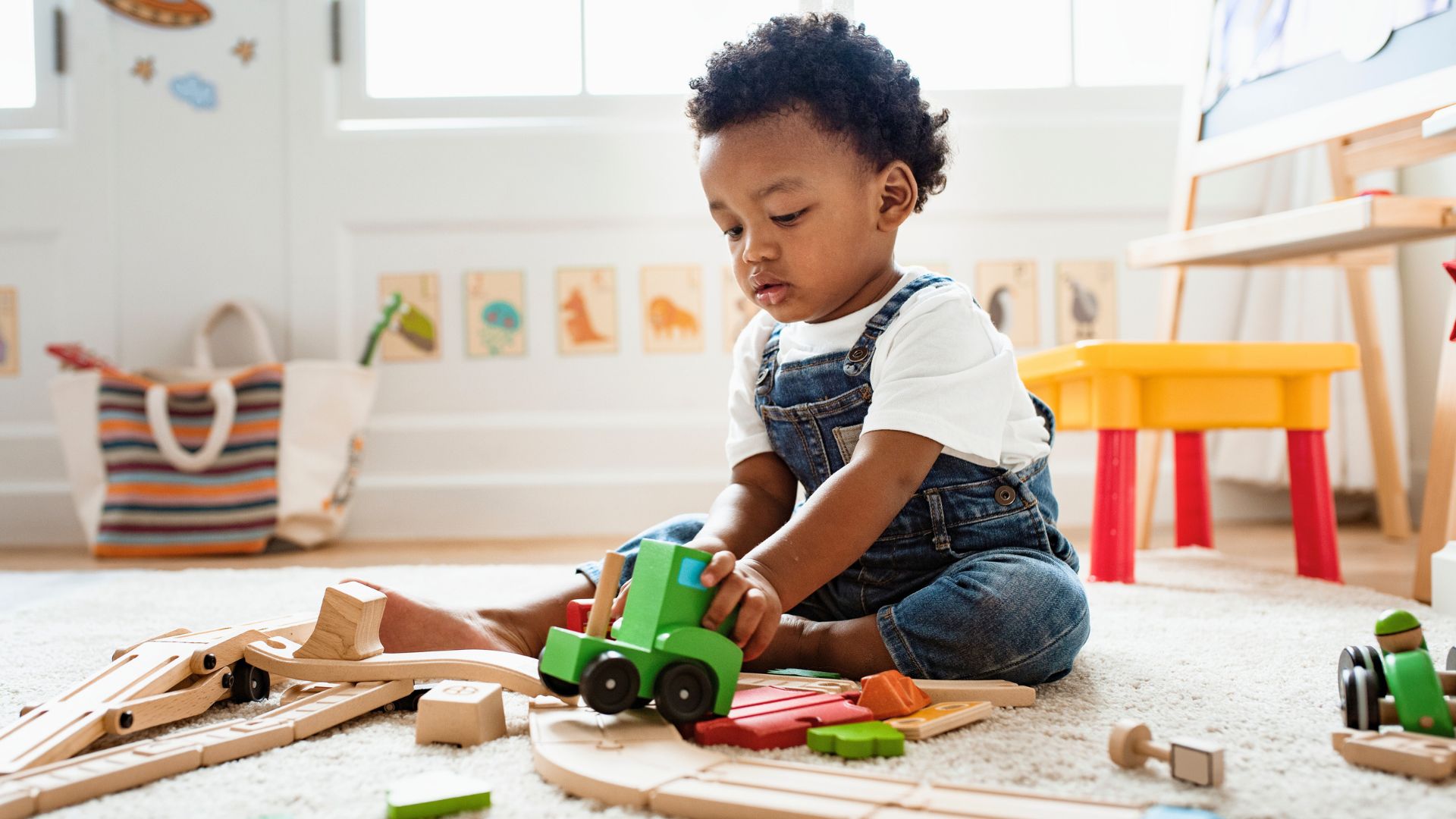
Designers, pyramids, and sorters can train perseverance and keep the baby busy. Children like to build cubes in a row, make slides, and roll rings. The kid can show imagination, spending time with safe toys.
3. Water games
This lesson will help to familiarize the child with the properties of the liquid and develop tactile sensations (the concept of a dry and wet object). You can offer the baby to pour water into various containers: bowls, cups, glasses, and bottles. Children like to bathe dolls and rubber toys.
For games with water use objects of different densities: paper, ping-pong ball, cloth. Some will sink, and others will remain on the surface. Blotting spilled water with napkins or sponges helps to study the properties of objects and teaches accuracy.
4. Modeling
Plasticine is used as a material for modeling. Such an activity acts as an effective stimulant for the fingers. The child strengthens the muscles of the hands and develops fine motor skills.
The baby doesn’t need to be blind to a realistic figure. The process is important here. Playing with plasticine is a powerful way to stimulate mental development, three-dimensional perception, imagination, and the formation of artistic skills.
5. Drawing
This lesson helps to develop the baby’s perseverance, endurance, and concentration. In addition to traditional pencils, other drawing methods can be used. Young children love finger painting. It is worth offering baby-safe paints and canvas paper. He can put on it prints of palms and fingers. Applying images using stencils, and threads contributes to the development of creative abilities.
While drawing, the child learns to compare objects, and trains memory, imagination, and logical thinking. A lesson with paints relieves stress, and tension, and helps to develop independence.
Parents Benefit When Toddlers are Kept Busy
In the life of parents come cardinal changes with the advent of a child. Often mothers do not have enough time for elementary activities, such as taking a shower or a full meal. It is important to allow the child to occupy himself from an early age.
Sometimes women experience embarrassment from the fact that they do not devote all their free time to the child. Psychologists insist that at first need to take care of yourself, then take care of the other person. Being tired of parenting is normal. It’s important not to ignore this. Emotional burnout of the mother negatively affects relationships in the family.
Parents get time to meet their needs when the baby is busy playing on his own. Over time, mom will have time to cook dinner, clean the room, and read a book. Children should be encouraged to study independently. When it comes to spending time with children, it’s the quality that matters, not the quantity.




latest video

news via inbox
Nulla turp dis cursus. Integer liberos euismod pretium faucibua